Guide
Where to keep important documents at home
By the WhereKept team. Updated September 15, 2026.
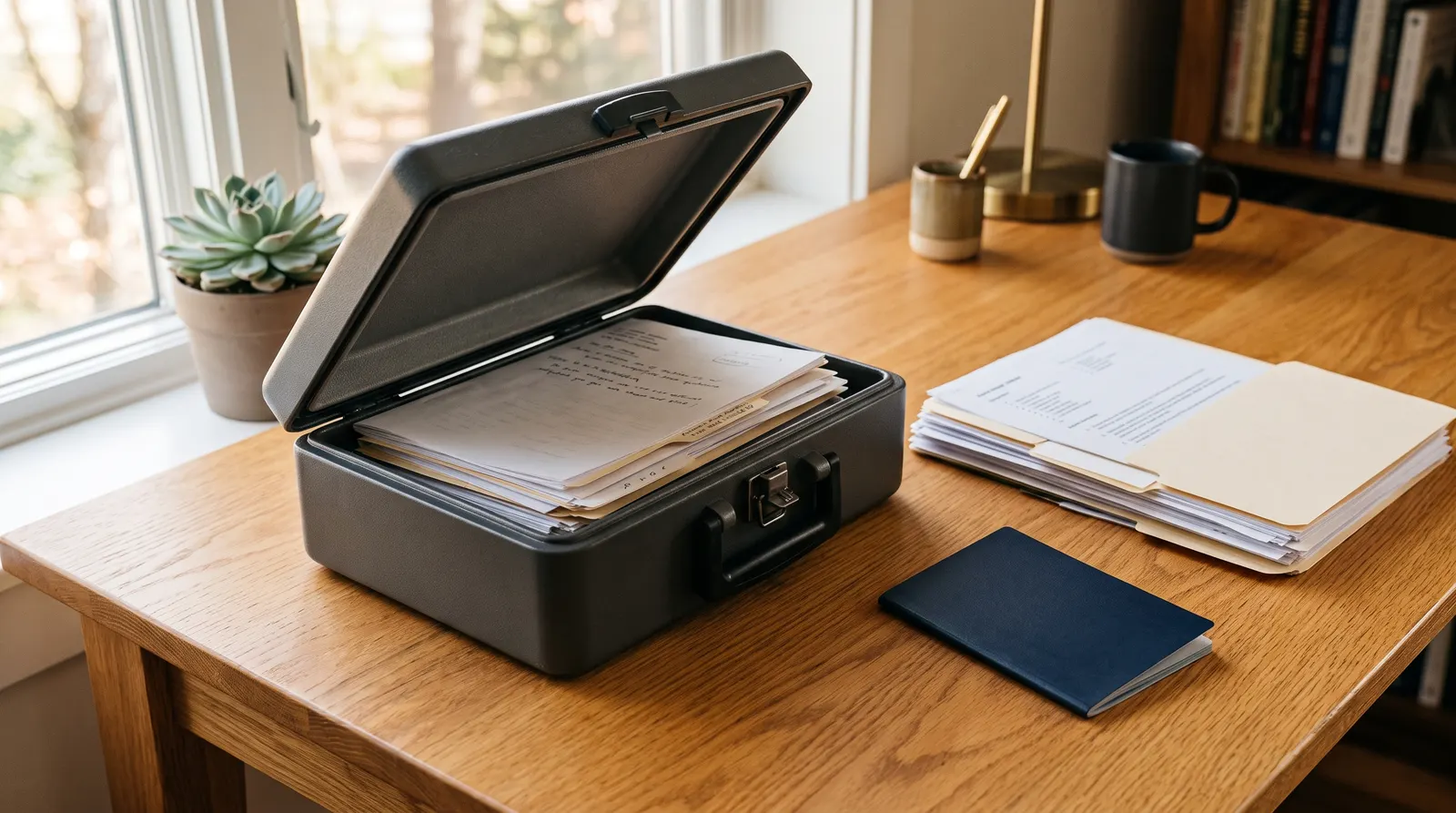
Important papers get moved to a special place precisely because they matter, and the special place is the one nobody remembers. Two things fix it: a home for each kind of document, and a written note of where that home is.
Sort papers into three piles
Hard to replace and rarely needed. Birth and marriage certificates, Social Security cards, deeds, car titles, wills and powers of attorney, adoption and citizenship papers.
Hard to replace and sometimes needed. Passports, insurance policies, immunization records, warranties for large purchases.
Replaceable. Bank and card statements, utility bills, most tax supporting paper, manuals. Most of this can be a download instead of a drawer.
Where each pile belongs
- A locked fireproof box at home for anything you might need on short notice: passports, insurance policies, a copy of the will, the list of account numbers. Bolt it down or keep it somewhere a thief will not simply carry off, because a small box is portable.
- A bank safe deposit box for the rarely needed originals: deeds, titles, certificates you would have to petition a court or an agency to replace. Remember it is only open during bank hours, and that a box in a single name can be hard to open after a death.
- A filing drawer for the replaceable pile, thinned once a year.
- A scan of everything in encrypted storage, plus one copy somewhere that is not your house.
If you live where flooding is a risk, keep the fireproof box off the basement floor. Fireproof and waterproof are different ratings, and cheap boxes often claim one and not the other.
Write down where they are
A document is only as findable as the note that says where it lives. Make one place that records, for each pile, exactly where it is: which room, which cabinet, which drawer, which folder. Keep that note where more than one adult can reach it. A sheet in a kitchen drawer works. So does a shared list on a phone.
This is the job WhereKept does. Passports become an item with an address, Office · Filing cabinet · Fireproof box, and searching for passport returns it. With Plus, everyone in the household sees the same answer, and the app records who moved something and when, so the trail does not end with one person’s memory. The shared household guide covers that side.
Once a year
- Check that what the list says is still true. Papers move.
- Renew what is close to expiring. Passports need six months of validity for many countries.
- Shred the replaceable pile you no longer need.
- Re-scan anything that changed, and confirm the offsite copy still opens.
If you are documenting the rest of the house at the same time, the printable home inventory checklist covers what to record for belongings.
Questions
- Should passports live in a safe deposit box?
- No. A passport is needed on short notice and a bank box is only open during banking hours. Keep passports at home in a locked fireproof box. Use a bank box for papers you rarely touch and would struggle to replace, like a deed or a car title.
- Are digital copies good enough?
- They are enough to start a replacement, prove a number, or fill a form. They are not the original. Keep scans as a backup, not a substitute, and store them somewhere encrypted rather than loose in a photo library.
- What if the only person who knows where things are is not there?
- That is the real risk. Write down where each thing lives and make sure another adult in the house can find that note. This is the whole reason we built WhereKept around a household rather than one person.
- How long should I keep tax records?
- The IRS generally says three years from filing, and longer in specific cases, for example six years if income was understated by a large amount. Check your own situation on irs.gov rather than relying on a rule of thumb.