Guide
A free home inventory checklist for insurance
By the WhereKept team. Updated September 27, 2026.
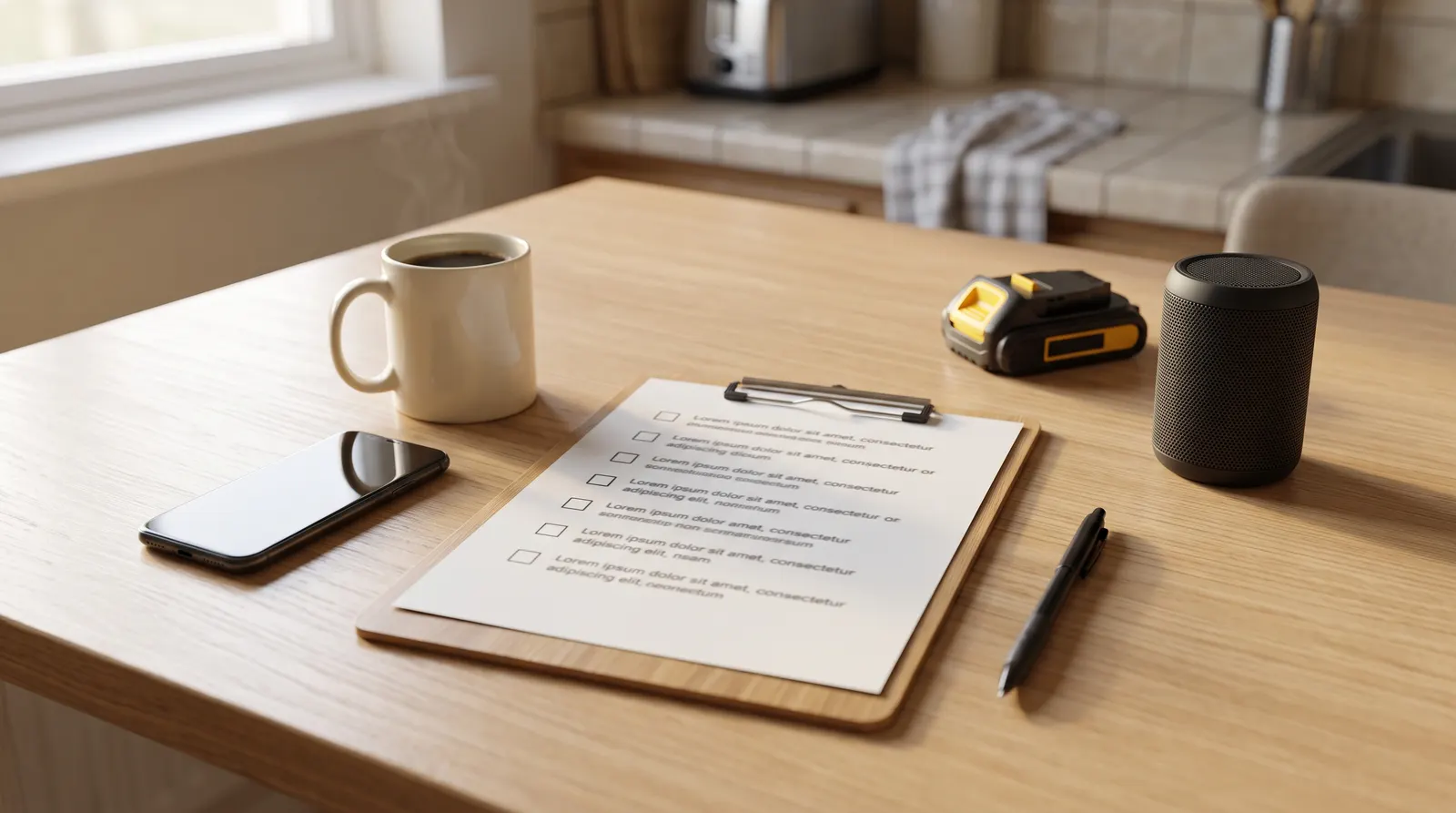
If you ever file a claim, the insurer asks what you owned, what it cost, and when you bought it. Trying to remember that after a fire or a burglary is miserable and expensive. An hour with a printed sheet now is enough to fix it for most houses.
Download the checklist
Home inventory checklist (PDF). Two pages, free, no email address needed. The first page starts a room: a table for the details insurers ask for, a list of rooms to cover, and a reminder of the things most people forget. The second page is more rows for the same room. Print the first once per room and the second as many times as the room needs.
How to work through it
- One room at a time. Start with the room holding the most value, usually the living room, the home office, or the garage.
- Open everything. Closets, drawers, bins, the attic, the shed. What is out of sight is what gets missed.
- Write where it lives, not just what it is. A room name is not enough when you are trying to find something. Garage, tool chest, bottom drawer is.
- Photograph as you go. Wide shots of the room, then the open drawers, then close ups of serial numbers.
- Keep receipts with it. For anything expensive, a photo of the receipt beats a remembered price.
- Put a copy somewhere else. Scan the sheets or photograph them, and store that copy outside the house.
Easy to forget
Jewelry, tools, sports and camping gear, holiday decorations, art, musical instruments, collections, bikes, lawn equipment, small kitchen appliances, and everything in the attic and the crawl space. Also check whether your policy limits categories like jewelry, cash, or collectibles, because that is usually where a claim falls short.
Paper or app
Paper is fine, and for a small house it may be all you need. It struggles in two places: it is hard to search, and it goes out of date the moment someone moves something.
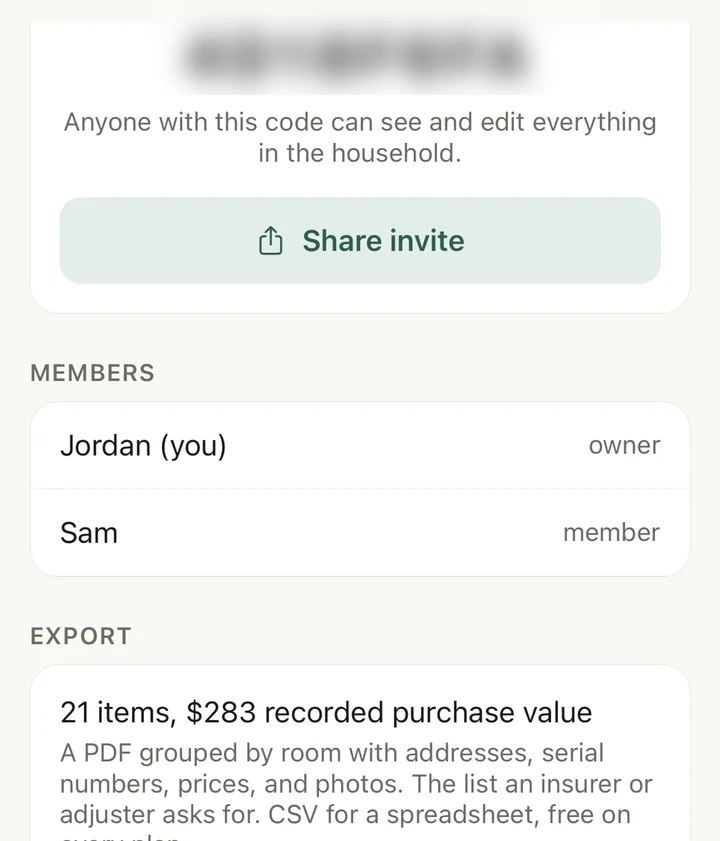
WhereKept keeps the same information on your iPhone. Every item gets a place, so search returns an address you can walk to, and the whole household can add and move things on Plus. The spreadsheet export is on every plan, and Plus adds the insurance PDF grouped by room with photos, serial numbers, prices and purchase dates.
Whichever you use, the rule is the same: write down where things live, and keep a copy somewhere other than the house. If documents are what you are sorting out, see where to keep important documents.
Questions
- Is the checklist really free?
- Yes. It is a PDF you can download and print as many times as you like, with no email address and no account. It works on its own with a pen.
- What should I record for each item?
- The name, where it lives, the brand and model, the serial number if it has one, when you bought it and what it cost. Serial numbers matter most for electronics, tools, appliances, bikes and instruments.
- Do I need photos as well?
- Yes. Photograph each room wide, then open the closets and drawers and photograph those, then take close ups of serial numbers and anything valuable. Photos and the written list do different jobs in a claim.
- Where should the finished list live?
- Somewhere that survives the event you made it for. Keep a copy outside the house: cloud storage, a safe deposit box, or a relative's house. A list that burns with the house helps nobody.
- How often should I update it?
- When something expensive comes in or goes out, and once a year otherwise. A calendar reminder tied to your insurance renewal is an easy anchor.